





Vivek Kumar Nirmal:
Hon’ble Dr. Babasaheb Ambedkar was a renowned economist, jurist, democrat, polyglot, Political philosopher, and social reformer, icon of vulnerable groups, he fought throughout his life for social justice and caste based discrimination from 1920-1956 till his mahaparinirvan (passed away), advocated for egalitarian society and enlighted India, his idea consideration not than national builder, his core principal of equality, liberty, fraternity and justice. He chaired the drafting committee and served as the first law minister of free India. During the Ministry of law he strongly supported the Hindu Code Bill for the upliftment of women irrespective of caste. He also proposed ideas and recommendations for various committees, including the Southborough Committee and the Round Table Conference (RTC); every committee accepted his recommendations, such as the right to vote for all Indians in the Simon Commission, and in the RTC, fundamental rights and remedies, federalism, taxation, and the federal court, etc. That is why Ambedkar was one of the greatest human liberators of the 20th century.
Though Ambedker’s vital role, we should understand beyond the legacy of drafting the constitution of the world’s greatest democratic country. His contribution to education, social participation, permanent sovereignty of indigenous peoples over natural resources, and human dignity. He didn’t demand the improvement of the condition of the oppressed class; rather, he sought structural transformation.
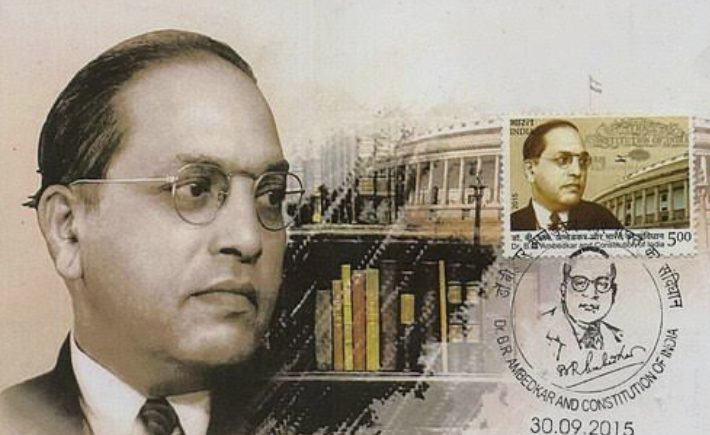
The struggle against caste: A battle for humanity
By the accident of birth, the Mahar family in 1891, from childhood to old age, experienced caste-based discrimination. Despite his remarkable intellectual abilities,however he gained double master and a phd in economics from columbia,USA, Msc, Dsc in economics London School of Economics and Bar at law gray’in London,through the discipline, he wrote “No peon no water” in his autobiography (waiting for visa) during his professorship.
He knew that education is an instrument of emancipation from caste-based discrimination. His work” Annihilation of Caste, ” is like a chargesheet against caste hegemony. Ambedkar argued that caste is not only the division of labour but also the division of labourers, to maintain the social order. The outcomes go beyond economic inequality to affect social relationships. Even his recommendation was radical within the domain of democratic and human rights values. One piece of evidence is the Mahad Satyagraha for access to water from the Chavdar tank. This revolution, influenced by Ambedkar and the Russian Revolution in 1917, was not only about access to water. It was the declaration of Human rights and the dignity of public resources. Through such revolutionary action, Ambedkar emancipated the millions of people who were denied basic human rights.
Future democracy in India
Since the 1920 Southborough Commission came to India, Dr. Ambedkar played a prominent role in shaping the future democracy of India; he strongly supported labour, moral, intellectual, and economic democracy. From 1926-1942 spoke in the Mumbai Legislative Assembly and council on rights, mostly on labour, taxation, finance, etc. Ambedkar was the champion of labour rights in India because he advocated for labour rights before the Philadelphia Declaration. However, his entire life was a struggle for women and marginalised communities for economic and political rights; his idea was that political representation for women, Dalits, and backward classes in India is a tool for upliftment. When India was free from the English regime, Ambedkar was the Chairman of the drafting committee for the new constitution. During the drafting, he guaranteed the fundamental rights of India irrespective of caste, race, gender, place of birth, and religion, and representation for the depressed classes, which faced historical injustice, including rights to education and participation everywhere. In the case of affirmative action, indigenous people were enshrined based on geographical and cultural isolation rather than their birth rights.
Ambedkar’s Universal Principle
At the time of drafting the constitution of the world’s largest democratic nation, his fundamental ideas were Liberty, equality, fraternity, and Justice. If I am not wrong, Ambedkar was the constitutional expert who tabled the word ‘Dignity ’ in the Constituent Assembly of India on 21st February 1948, before the Universal Declaration of Human Rights on 10th December 1948. During his higher study from abroad like America, London and Germany he became freethinker, he influenced by his professor Prof. Seligman and devay and various thinkers,later benefited to india for showing the human and democratic rights of the indian based on equality with equity apart from equality, liberty, fraternity and justice his fundamental principle. While liberty is for individuals, equality is for the equal among unequal, and fraternity for social solidarity, without which dignity remains fragile.
Ambedkar strongly supported social democracy rather than political democracy. A democrat who enshrined rights to vote for every citizen, even those without primary education, argued that everybody has capacity to know what is wrong vice versa,while exclusion or economic dependence in everyday life. Substantive democracy will be more effective than formal elections. Unfortunately these ideas remain relevant in the twenty-first century,where constitutional equality coexists with prevalent caste discrimination in education, employment, land and social resources.
India and Beyond
Ambedkar’s revolution against caste-based society, racial discrimination, and structural inequality. His thoughts are relevant beyond India. Although Ambedkar’s struggle emerged from the specific historical conditions of caste society, his ideas have significance beyond India’s borders. His work offers valuable perspectives for examining other systems of inherited status, racial discrimination, and structural inequality. Ambedkar’s contemporary W. E. B. Du Bois’s struggle against racial discrimination, Martin Luther King’s fight against racial segregation, and Mandela’s fight against apartheid can be an effective perspective for human emancipation. Evidently, Ambedkar exposed caste as deeply rooted in the structure of hierarchy and connected democratic transformation with political participation, education, and social justice. His revolution was not only constitutional reforms but also social relationships. Ambedkar’s core idea (Equality, Liberty, Fraternity, and Justice) remains a relevant debate in public discourse about labour migrants, discrimination, and unequal access to education for marginalised society. Institutional discrimination denies people equal dignity. The persistence of caste discrimination demonstrates the distance between constitutional promises and social realities. His legacy also reminds us that liberation is not a completed historical event. Ultimately, Dr. B. R. Ambedkar’s enduring contribution was to insist that no society can claim genuine progress while human dignity remains conditional on birth. His vision demands a world in which liberty is meaningful, equality is substantive, and fraternity crosses the boundaries of inherited hierarchy.
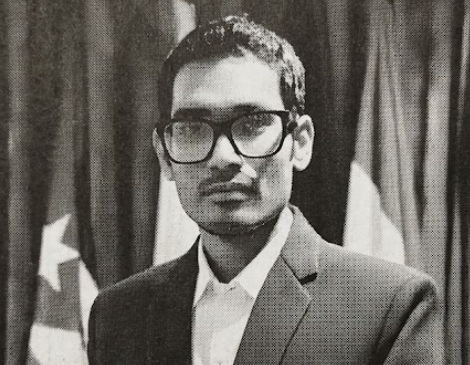
Vivek Kumar Nirmal, LLM Candidate at South Asian University, New Delhi, India