




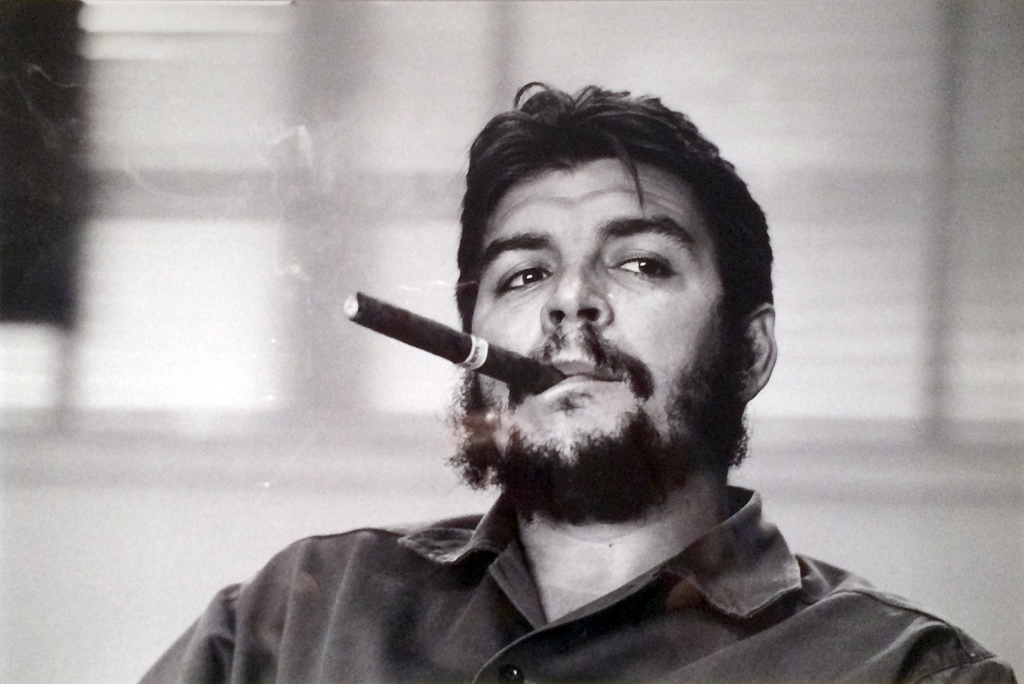
Few faces in modern history are as instantly recognizable as Ernesto “Che” Guevara. His image—long hair, beret with a star, intense gaze—has appeared on flags, walls, T-shirts, and protest banners across the world.
Yet behind the icon exists a more complicated man.
To some, Che Guevara was a heroic revolutionary who dedicated his life to fighting injustice and imperialism. To others, he was a rigid ideologue who believed armed revolution justified violence and authoritarian methods.
Between these two extremes stands a figure who cannot easily be reduced to slogans.
Che Guevara was not merely a guerrilla fighter. He was a doctor, writer, political thinker, military strategist, diplomat, and revolutionary dreamer who attempted to reshape the political map of the twentieth century.
Birth: A Child of Privilege With a Fragile Body
Ernesto Guevara de la Serna was born on June 14, 1928, in Rosario, Argentina.
He came from a relatively educated middle-class family with roots in both Spanish and Irish ancestry.
His father, Ernesto Guevara Lynch, and his mother, Celia de la Serna, encouraged intellectual curiosity and independent thinking.
But childhood brought a challenge that would shape his character forever.
Che suffered from severe asthma.
Throughout his early years he experienced painful attacks that often left him struggling to breathe.
Instead of allowing illness to define him, he developed a fierce determination.
He played sports, read obsessively, and refused to accept physical limitations.
His father later recalled:
“There was rebel blood in my son’s veins.”
Education: The Medical Student Searching for Answers
Che entered University of Buenos Aires to study medicine.
Medicine attracted him not only as a profession but also as a way of understanding human suffering.
He was fascinated by diseases such as leprosy and wanted to help vulnerable communities.
But the classroom eventually became too small for his curiosity.
He wanted to understand not only illness—but the conditions that created poverty itself.
The Motorcycle Journey That Changed Everything
In 1951, Che and his friend Alberto Granado began a famous journey across Latin America on a motorcycle.
The journey later inspired the memoir and film The Motorcycle Diaries.
The trip transformed him.
He witnessed poverty in Chile.
He saw exploited mine workers.
He encountered indigenous communities living in harsh conditions.
He worked in leprosy colonies.
For Che, these experiences became political lessons.
He increasingly believed poverty was not simply accidental.
He concluded it was tied to economic systems and foreign influence.
Years later he wrote:
“I am not the person I once was.”
The medical student was gradually becoming a revolutionary.
Guatemala: Where Reform and Reality Collided
Che later traveled to Guatemala, where progressive reforms under President Jacobo Árbenz were underway.
However, in 1954 a coup supported by the Central Intelligence Agency overthrew Árbenz.
The event deeply affected him.
He became convinced that powerful external forces would resist social change through democratic means.
This experience radicalized his worldview.
Che increasingly embraced Marxist ideas and revolutionary struggle.
Meeting Fidel Castro: The Beginning of a Revolution
In Mexico City, Che met Fidel Castro and Raúl Castro.
The meeting changed history.
Che quickly joined Castro’s movement aimed at overthrowing Cuban leader Fulgencio Batista.
Initially Che joined as a doctor.
Soon he became something more.
During the guerrilla campaign he demonstrated discipline, courage, and leadership.
Within a short time, he emerged as one of Castro’s most trusted commanders.
Cuba: Victory and Power
In 1959 the Cuban Revolution succeeded.
Batista fled.
Che entered Havana as one of the revolution’s heroes.
But victory created new challenges.
Che suddenly moved from mountains and battlefields into government offices.
He became head of Cuba’s national bank and later Minister of Industry.
Despite having little formal economic training, he attempted ambitious reforms.
He pushed industrialization, economic centralization, and a vision of socialist development based on collective sacrifice.
The Revolutionary Ideal: Creating the “New Man”
Che believed revolutions required more than political change.
He argued that society needed a “new man”—someone motivated not by personal profit but by social responsibility.
This idea became central to his political philosophy.
He feared that materialism and consumer culture would corrupt revolutionary ideals.
For supporters, this vision represented moral courage.
For critics, it appeared unrealistic and authoritarian.
The Controversial Side of Che
Che remains one of the most debated figures in modern history.
Supporters celebrate his struggle against inequality and colonial influence.
Critics point to executions carried out after the Cuban Revolution and his role in establishing revolutionary tribunals.
Che himself defended harsh measures as necessary for protecting the revolution.
This remains one of the central moral debates surrounding his legacy.
Was he defending a revolution, or sacrificing human rights in the name of ideology?
The argument continues today.
Leaving Power: The Restless Revolutionary
Most political leaders fight to gain power.
Che voluntarily walked away from it.
Despite holding senior positions in Cuba, he became frustrated.
He believed revolutions should spread internationally.
He first traveled secretly to Congo, hoping to support revolutionary movements there.
The mission failed.
Later he moved to Bolivia.
There he hoped to ignite a continent-wide revolution across Latin America.
Instead he found isolation and difficulty.
Capture and Death
On October 8, 1967, Che was captured by Bolivian forces with support from American intelligence operations.
The following day he was executed.
He was thirty-nine years old.
According to accounts, his last words reportedly included:
“Shoot, coward. You are only going to kill a man.”
Whether entirely accurate or partly mythologized, the words reflected the image that later grew around him.
His body died.
His legend expanded.
Legacy: Man, Myth, and Symbol
Che Guevara occupies a unique place in history.
Very few political figures have become cultural symbols on a global scale.
His face appears in places where people protest injustice, inequality, or oppression.
Ironically, the revolutionary who criticized capitalism became one of the most commercially reproduced images in history.
Yet Che’s enduring power lies not in merchandise or posters.
It lies in the unresolved questions he represents.
How far should people go in pursuit of justice?
Can violence create equality?
Can idealism survive power?
Che Guevara did not leave behind simple answers.
He left behind arguments, inspiration, controversy—and a reminder that ideas sometimes outlive the people who create them.