





Article submitted by: Md Salim Hosain, System Change and Business Development Advisor
Over the last one year, I have been exploring markets linked with climate. I did not look only at climate challenges. I also tried to understand where market opportunities exist under climate adaptation and how those opportunities can move towards climate action.
One market caught my attention: the crab market in southwest Bangladesh, especially in Shyamnagar, Satkhira.
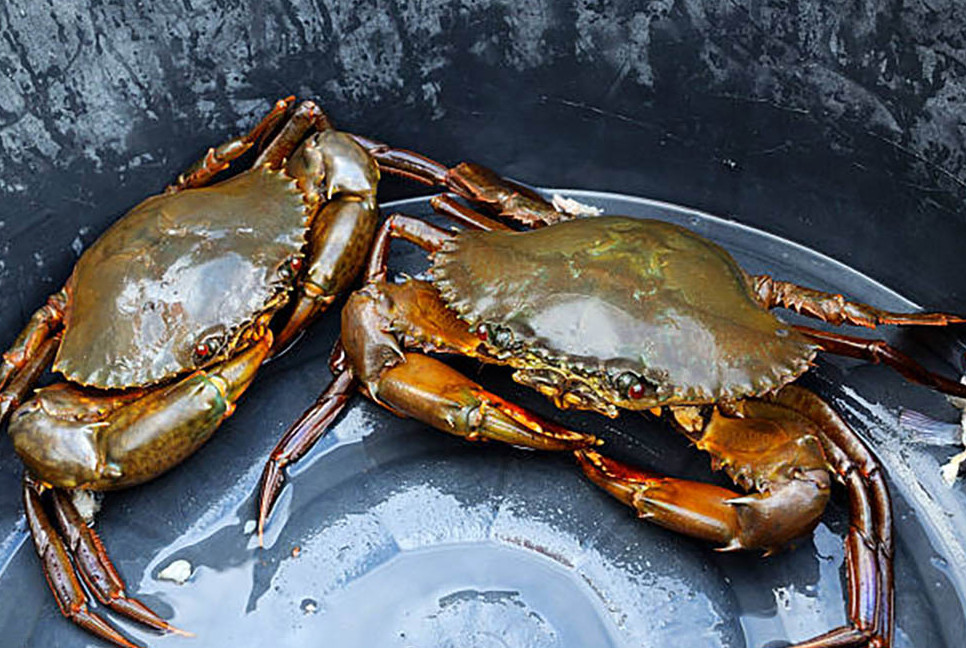
At first, when people hear the word “crab,” most of us think about hard-shell crab. That is normal. We often believe what we see in front of us, what we hear on social media, and what influencers present in their blogs. But beyond that familiar image, there is another market: soft-shell crab.
This market is not just about seafood. It is linked with Bangladesh’s export economy, the local economy of Satkhira and Shyamnagar, and the livelihoods of coastal communities who have depended on fish, crab, aquaculture, and seafood processing for generations. Recent reports also show that Bangladesh’s soft-shell crab export is growing, with international buyers from markets such as Japan, Europe, and the United States showing demand for this product.
But here is the concern: this promising sector is still fragile.
A growth market never walks alone. It needs finance, policy, governance, technical support, market systems, and responsible business practices. It needs 360-degree support. In the soft-shell crab sector, many of these support functions are still weak or missing.
Finance is one of the biggest gaps. Many financial institutions say the business is not mature. They want timeline, repayment discipline, and low risk. Those are valid concerns. But for a growing market, the first question should not only be timeline. The first question should be: how can we help this market access the right finance so it can grow responsibly?
After that, we can discuss timeline, repayment structure, sustainable finance, and risk management.
A growing sector needs some space to grow. If it does not get that space, it will not mature. It will slowly die. And if the sector dies, the full value chain suffers: farmers, collectors, processors, exporters, transporters, workers, and local service providers.
This is not only a business issue. It is also a Blue Economy issue.
Bangladesh’s Blue Economy is often discussed at the policy level. Fisheries, aquaculture, marine resources, coastal livelihoods, and seafood exports are recognised as important parts of national growth. Bangladesh has also explored blue bond opportunities to finance Blue Economy sectors. But the challenge is simple: many real coastal SMEs do not know which door to knock on.
Climate finance exists. Blue finance exists. Sustainable finance exists. But for many SMEs in southwest coastal Bangladesh, these windows are still difficult to access. Research on climate finance for MSMEs in coastal Bangladesh also highlights the need to improve finance access for local enterprises working in agriculture, aquaculture, and climate-affected areas.
This creates a strange situation.
The opportunity is real. The market is traceable. The model is doable. The export potential exists. The local livelihood impact is clear. But the finance system still behaves as if the sector is unknown.
I spoke with several financial institutions to explore support for SMEs and farmers so they can increase business, improve revenue, and contribute more to Bangladesh’s economy. Most responses were positive in tone, but not strong in action. The common feedback was that the business is not yet mature.
But then the question comes: who will help the sector mature?
Do we always need donors to boost our economy? Why not public stakeholders? Why not local financial institutions? Why not climate finance actors? Why not a proper Blue Economy finance facility for coastal SMEs?
Donors will not earn export revenue from this market. Bangladesh will. Local communities will. Coastal SMEs will. Farmers and workers will.
The southwest coastal region is already climate-vulnerable. Salinity, cyclones, flooding, and freshwater stress affect agriculture and livelihoods. The World Bank has also highlighted that climate change will significantly affect river salinity in southwest coastal Bangladesh by 2050. In this context, crab, seafood, aquaculture, and responsible coastal value chains are not only business opportunities. They are part of climate adaptation.
This is where companies like Marine Marvels can play an important role.
Marine Marvels can work as an anchor company for the coastal seafood value chain. It can connect farmers, collectors, processing workers, cold chain actors, and exporters with formal markets. It can help improve traceability, food safety, buyer confidence, waste recycling, seawater recycling, and responsible farming practices. It can also help financial institutions understand that coastal seafood SMEs are financeable when the value chain is properly organised.
This is not a call for charity. This is a call for market-based Blue Economy finance.
The soft-shell crab market can support export earnings, local income, coastal jobs, and climate-resilient livelihoods. But it needs proper recognition, policy support, and finance for the whole value chain, not only one company. It needs finance for farmers, collection centres, cold chain, processing, compliance, working capital, waste recycling, and ecosystem-sensitive practices.
The Blue Economy should not stay only in conference papers and policy documents. It should reach the field, the farm, the collection centre, the processing unit, and the SME that is trying to grow in a disaster-prone coastal area.
Blue Economy Finance for Coastal SMEs in Southwest Bangladesh is still an open opportunity.
Now is the time for banks, investors, public agencies, climate finance actors, and development partners to step in, understand the sector, and support a promising market before it loses momentum.
Because if we want climate action, we must finance the businesses that are already working inside climate reality.